Point of view
Agentic AI will not stay a pilot. It will proliferate.
The people who make it governable will determine how well that goes. This is the connective tissue between everything else on this site.
Core beliefs
Seven things I hold to
1. From copilots to coworkers
Assistive chat is the on-ramp. Real value arrives when agents own bounded tasks end to end.
2. Domain grounding beats model size
An agent with a good knowledge model of the process outperforms a bigger model with none.
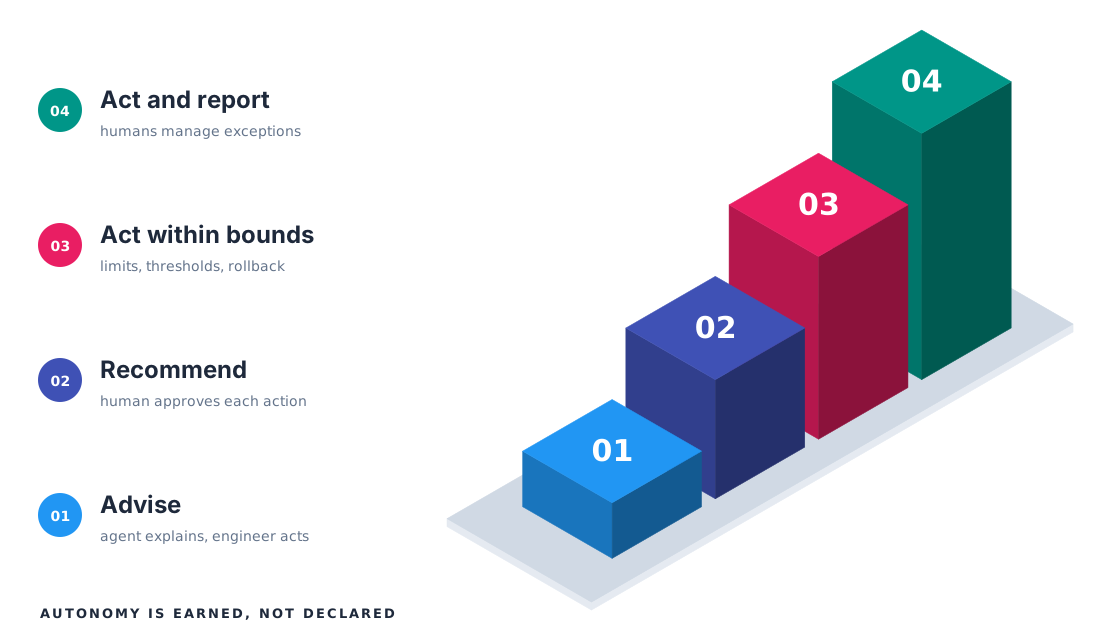
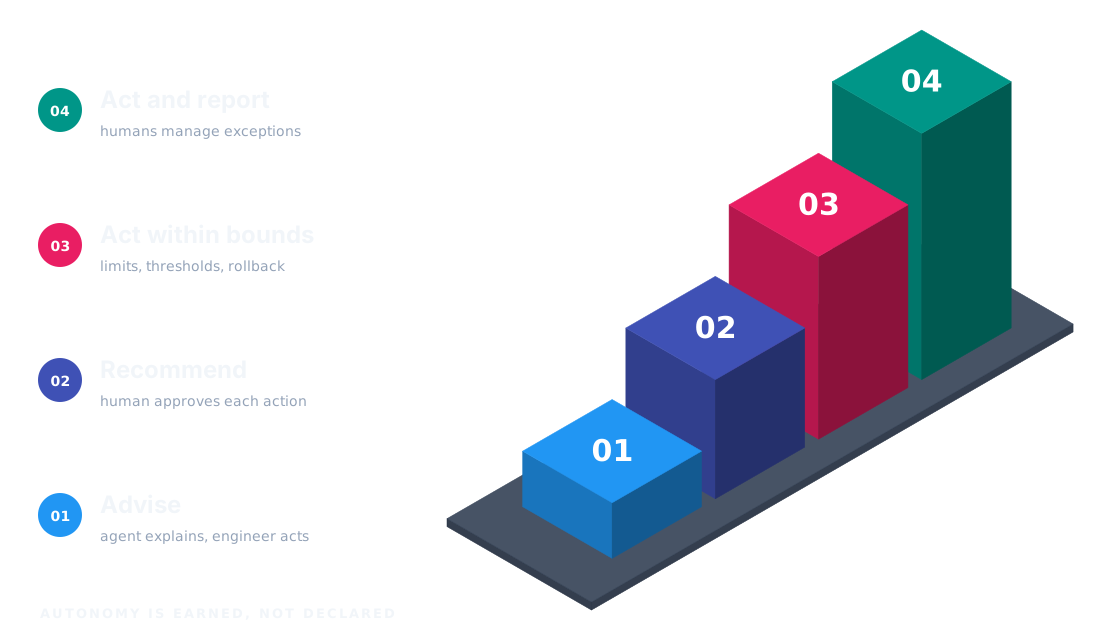
3. Autonomy is earned, not declared
Every agent should start in advise mode and graduate through explicit evidence, thresholds and approvals.
4. Humans move up the stack
Engineers shift from operating to supervising, from chasing alarms to setting policy and reviewing exceptions.
5. Agents need infrastructure, not just prompts
Shared knowledge, tool access, orchestration, observability, evaluation and audit are the real product.
6. Reuse is the multiplier
One well-governed agent pattern deployed across ten use cases beats ten bespoke builds.
7. Open standards matter
MCP, open ontologies and SEMI standards keep agent ecosystems interoperable and avoid lock-in.
Proliferation
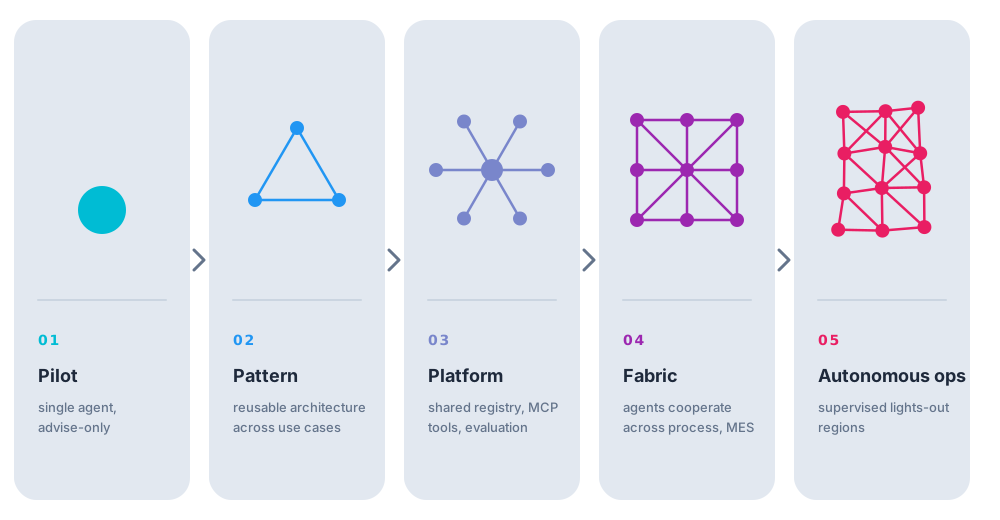
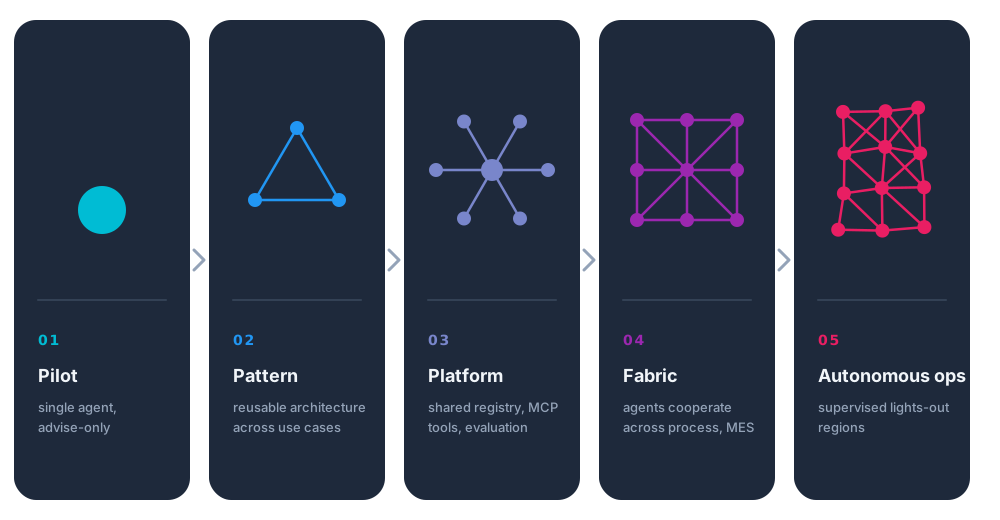
What proliferation looks like in practice
1. Pilot
A single agent on a single use case, advise-only.
2. Pattern
A reusable architecture (knowledge model, orchestration, HITL) proven across two or three use cases.
3. Platform
A shared agent registry, tool access through MCP, and common evaluation and observability.
4. Fabric
Agents cooperate across process, equipment, MES and supply chain, with policy-driven autonomy.
5. Autonomous operations
Supervised "lights-out" regions of the factory, with humans managing exceptions and strategy.
Earning autonomy
Four stages, each with its own evidence
Advise, recommend with approval, act within bounds, act and report. An agent moves up only when metrics, thresholds and sign-off say it has earned the next stage.
Hard problems
The problems I care about most
Trust and evaluation
How to measure whether an agent is right, safe and improving, before and after deployment.
Guardrails in high-value environments
Where a wrong action can scrap wafers or stop a line.
Knowledge capture
Getting tribal expertise into machine-usable form without freezing it.
Integration debt
Connecting agents to legacy MES, equipment interfaces and data silos through standards.
Change management
Earning engineer trust and designing roles for a supervised-autonomy workplace.
Local and private models
Running capable smaller models on-premises where data cannot leave the fab.
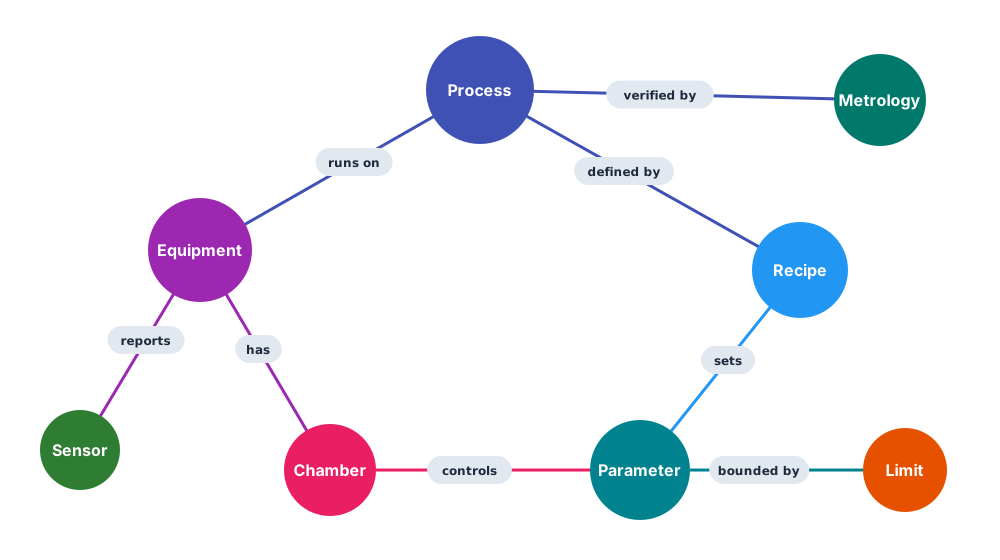
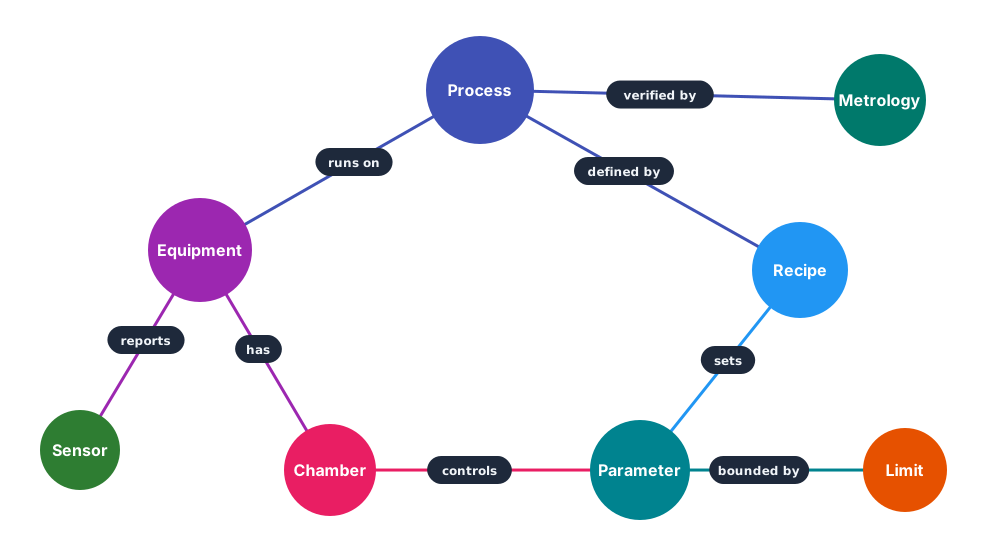
Knowledge first
Teach the agent the process
Agents reason over a structured model of processes, equipment, parameters and limits, rather than guessing from text alone.
Beyond the fab
The same patterns, applied elsewhere
The same patterns apply to engineering teams, revenue operations, infrastructure and personal productivity. That is why I also build and test multi-provider agent applications in my own time, across Gemini, Anthropic, OpenAI, DeepSeek, AWS Bedrock, Azure and local Ollama models. For the fab-specific application of these ideas, see AI × Semiconductor.
Thinking about agent governance?
I am always glad to compare notes on evaluation, guardrails and staged autonomy.