· JD Nayak · Agentic AI · 2 min read
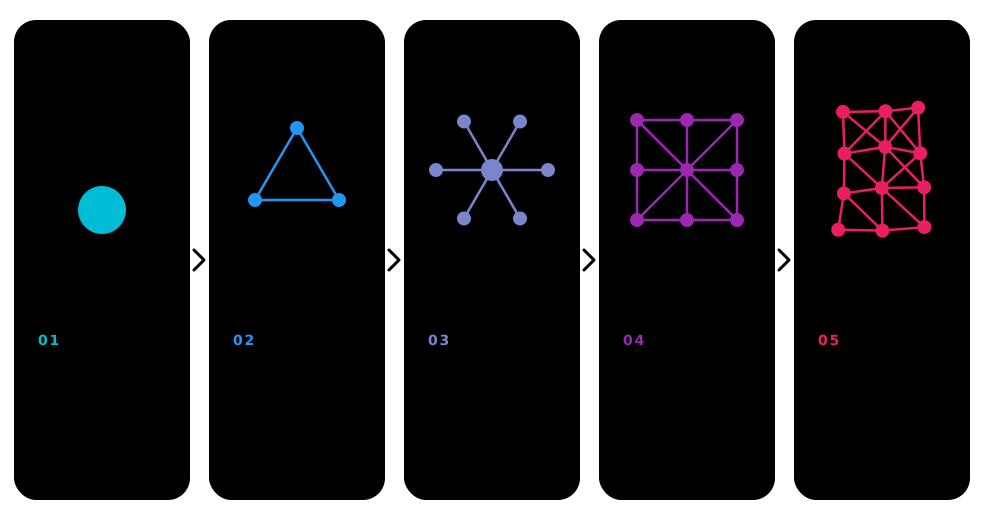
Progressive autonomy: a four-stage path from advisor to actor
Autonomy should be earned through evidence and approvals. Here is the four-stage path I design agents around.
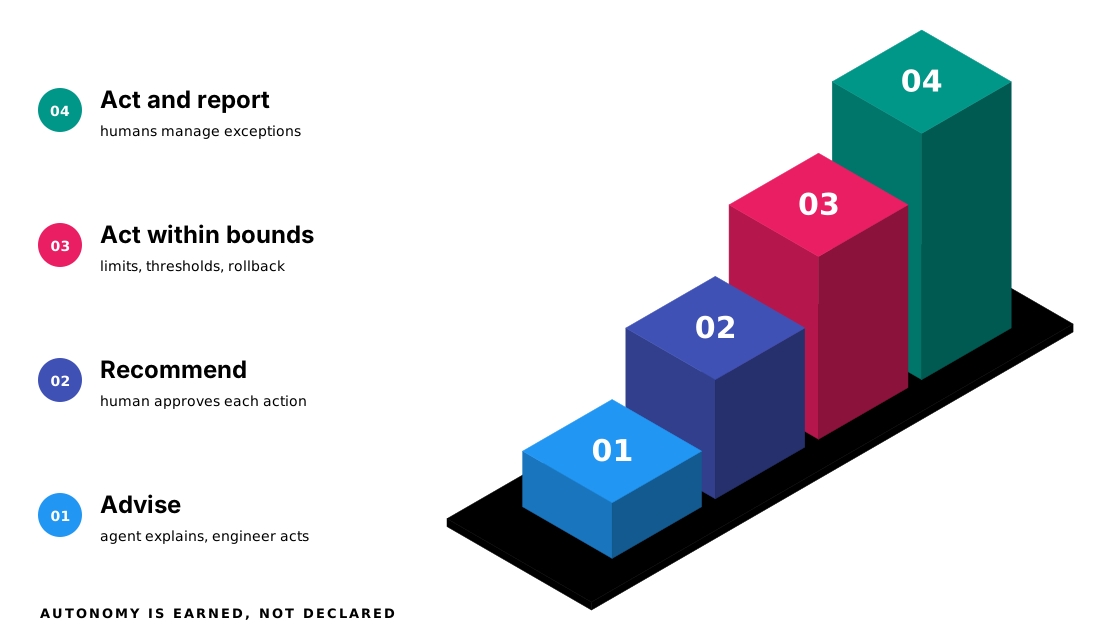
In a fab, a wrong action can scrap wafers or stop a line. That is why I never ask whether an agent should be autonomous. I ask which stage of autonomy it has earned.
The four stages
- Advise. The agent investigates and explains. Engineers decide and act.
- Recommend with approval. The agent proposes a specific action. A human approves it at a defined gate.
- Act within bounds. The agent acts inside explicit limits, with confidence thresholds and rollback paths.
- Act and report. The agent owns a bounded task end to end. Humans supervise exceptions and set policy.
What moves an agent up a stage
Promotion needs evidence, not enthusiasm. For each agent I define in advance:
- the metric that shows it is right, and the level it must hold
- the confidence threshold below which it must hand back to a human
- how long it must perform at that level before promotion
- who signs off
What every stage needs
Audit trails, rollback paths and confidence thresholds are first-class design elements from day one. If you cannot undo an action, the agent should not take it at stage three.
Humans move up the stack
This is not about removing engineers. At stage one they are operators. By stage four they are supervisors: setting policy, reviewing exceptions and improving the knowledge the agents rely on. Designing that change of role is as much part of the work as the models.